
Key Takeaways
- Achilles tendonitis is the most common overuse injury among athletes and active individuals.
- Research on 422 patients with chronic Achilles tendinopathy highlighted the clinical interest in PRP as a non-surgical treatment method.
- PRP is usually combined with activity modification, rehabilitation workouts and physical therapy to support recovery.
- Platelet-rich plasma takes the help of concentrated platelets from a patient’s blood to support the natural healing response of the body.
Achilles tendonitis can make simple activities uncomfortable. Exercising, running, climbing stairs, and walking might become painful as the condition progresses. Standard Achilles tendonitis treatment, like physical therapy, anti-inflammatory medications and rest, can help many patients. But some individuals continue to experience the symptoms. This has led to the growing interest in regenerative medicine treatment, such as PRP (platelet-rich plasma) injections.
Understanding Achilles Tendonitis
Achilles tendonitis takes place when the Achilles tendon becomes damaged, inflamed or irritated because of repetitive stress. The Achilles tendon is the largest tendon in the human body. It connects the heel bone to the calf muscles and plays an important part in jumping, running and walking. Some of the common causes of this condition include the following:
- Tight calf muscles.
- Repetitive overuse.
- Poor footwear.
- Improper training methods.
- Sudden increase in physical activity.
- Age-related tendon degeneration.
If the condition is left untreated, degeneration and severe inflammation might affect tendon function. It can also increase the danger of more serious injuries.
What are Platelet-Rich Plasma (PRP) Injections?
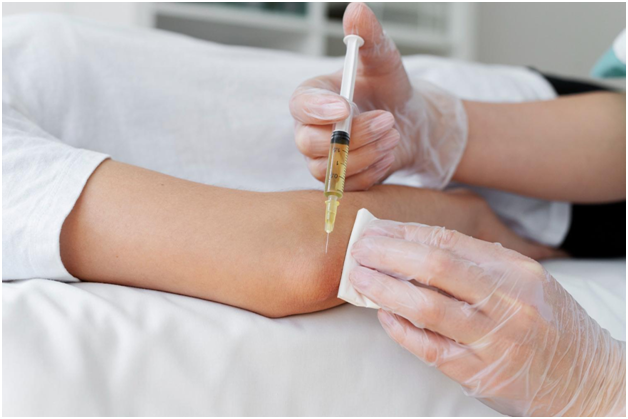
PRP injections take the help of concentrated solutions of platelets that are derived from the patient’s blood. This process starts with a blood draw. The blood then gets processed with the help of specialized equipment to concentrate and separate platelets. These platelets contain proteins and growth factors that play a part in tissue healing and repair. The concentrated PRP gets injected directly into the affected tendon area. Compared to medications that mainly focus on symptom relief, PRP aims to support the natural healing mechanisms of the body.
PRP injections use a concentrated solution of platelets derived from the patient’s own blood. The process begins with a blood draw. The blood is then processed using specialized equipment to separate and concentrate platelets. These platelets contain growth factors and proteins that play a role in tissue repair and healing. The concentrated PRP is then injected directly into the affected tendon area. Unlike medications that primarily focus on symptom relief, PRP aims to support the body’s natural healing mechanisms.
How PRP Might Support Achilles Tendon Healing?
PRP has attracted attention because tendons usually have a limited blood supply, which can slow down healing. Concentrated platelets might stimulate biological processes involved in tissue repair. Growth factors that are released by platelets might lead to tendon regeneration, along with healing responses. This regenerative method differs greatly from treatments and can lower inflammation and pain.
Why is PRP Gaining So Much Attention?
Interest in PRPR continues to grow within regenerative medicine and sports medicine because many patients are looking for alternative options to surgery for severe tendon injuries. It has been reported that six clinical studies involve 422 patients with severe Achilles tendinopathy. Researchers have examined the efficacy of PRP injections as a treatment option for long-lasting dysfunction and tendon pain. The number of patients included in the review shows the growing clinical interest in these injections and the increasing amount of research focused on regenerative treatments for tendon injuries. PRP injections continue to pull in attention because they use the body’s own healing mechanisms. Many specialists consider these injections a promising option for patients who have not experienced sufficient improvement via conservative treatments alone.
Conclusion
Platelet-rich plasma injection is currently helping reshape how healthcare experts approach severe Achilles tendonitis. PRP uses concentrated healing components from the patient’s blood to provide a regenerative treatment option. This might support tendon recovery and also help patients return to their everyday activities with improved function and comfort. Life Renewing Stem Cells keeps its focus on advanced regenerative medicine solutions. These solutions are created to help patients explore non-surgical options for musculoskeletal conditions. With customized treatment methods that might include regenerative medicine techniques and PRP therapy, the clinic works to support long-term wellness goals, mobility and healing.
FAQs
1. How long does it take to recover after a PRP injection for Achilles tendonitis?
Recovery timelines differ greatly based on the individual healing response and severity of the tendon injury. Some patients start rehabilitation after treatment, but a full tendon recovery can take several weeks to months.
2. Can athletes return to sports after PRP treatment?
Many athletes use PRP as part of their recovery strategy. Return-to-sport timelines depend on symptom improvement, tendon healing progress, and completion of a structured rehabilitation program supervised by healthcare professionals.
3. Is ultrasound guidance important during PRP injections?
Ultrasound guidance allows physicians to visualize the tendon and place the injection more accurately. This may improve treatment precision and help ensure the PRP is delivered directly to the affected area.
4. Can PRP be combined with other regenerative therapies?
Yes. Depending on the patient’s condition and treatment goals, PRP may be combined with other regenerative medicine approaches and rehabilitation programs to create a more comprehensive treatment strategy.