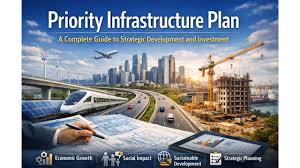

In today’s rapidly changing world, infrastructure is of paramount importance to economic growth, social well-being, and environmental sustainability. Infrastructure, from roads and railways to digital networks and hospitals, is a vital component in developing communities. But building infrastructure requires careful planning, prioritization, and investment. That’s why a Priority Infrastructure Plan (PIP) is essential. A PIP is more than just a list of projects—it’s a strategic roadmap that ensures governments and institutions invest wisely, deliver better, and achieve long-term sustainable development goals. This article will guide you through a complete guide to Priority Infrastructure Planning, including its purpose, components, economic and social impacts, implementation challenges, examples from around the world, and future trends.
Why is a Priority Infrastructure Plan Needed?
Infrastructure impacts nearly every aspect of today’s life. It supports business, healthcare, builds communities, and promotes economic growth. However, resources are limited, and deciding what to build and when can be difficult. The Priority Infrastructure Plan addresses these challenges: a strategic framework for selecting and sequencing infrastructure projects. This ensures that investments will have maximum impact, meet societal needs, and achieve long-term goals.
The foundation of today’s society
Infrastructure strives to support daily life and economic activities, such as highways and airports, water treatment plants, and digital networks. Without planning, investments can be wasteful, wasteful, or fail to meet societal needs.
Striving to strike a balance between long-term needs and limited resources
Government budgets are rarely infinite. By prioritizing more effective projects, PIP ensures that public and private funds are used wisely. It also helps identify projects that contribute to social equity, economic competitiveness, and environmental sustainability.
What is the correct information about a Priority Infrastructure Plan?
Definition and Scope
A Priority Infrastructure Plan is a permanent, long-term policy document that identifies infrastructure projects needed over a specific period, typically 10 to 30 years. It provides guidelines on funding, sequencing, and implementation, necessary for development across a range of sectors (such as transportation, energy, water, digital, and social infrastructure).
PIPs Answer Specific Questions
PIPs help governments and institutions answer three key questions: 1. What infrastructure is necessary? 2. Why is it important? 3. When should it be built? These questions prevent reactive or ad-hoc decisions that can lead to inefficiencies, poor funding, and fragmented infrastructure.
Example of Priority Infrastructure Plans
Australia: Emphasizes the adoption of a reliable project ranking system to prioritize investments.
South East Queensland (Australia): A $12 billion investment plan (2015–2025) will support 800,000 jobs.
India—PM Gati Shakti Yojana: A multifaceted connectivity plan to boost economic growth, integrating rail, road, airport, and airport infrastructure.
Smart Infrastructure and Digital Twins: Future Trends in Priority Infrastructure Planning
Digital modeling allows for better planning, monitoring, and optimization, leading to lower costs and better outcomes.
Climate Mitigation
Infrastructure plans place greater emphasis on climate adaptation, disaster mitigation, and long-term sustainability.
Green Energy and Low-Carbon Transportation
Electrified transport, renewable energy projects, and energy-efficient solutions will be key infrastructure priorities in the future.
Conclusion
In conclusion, a Priority Infrastructure Plan is not just a legal document—it is a blueprint for social inclusion, economic well-being, and environmental sustainability. PIPs strive to ensure that infrastructure delivers real value now and in the future by identifying high-impact projects, planning thoughtfully, and integrating smart financing.
FAQ
Q1: What is a Priority Infrastructure Plan?
A robust long-term plan that guides investment and delivery decisions and seeks to identify critical construction projects.
Q2: Why are Priority Infrastructure Plans needed?
They are successful in ensuring efficient use of funds, economic growth, improved quality of life, and environmental sustainability.
Q3: Who creates these plans?
These plans are often developed by governments and planning authorities in consultation with experts, communities, and private stakeholders.
Q4: How long do these programs typically last?
Most last from 10 to 30 years, depending on national development projections.
Q5: What projects are included?
These projects cover transport, energy, water, digital networks, social infrastructure, and more.